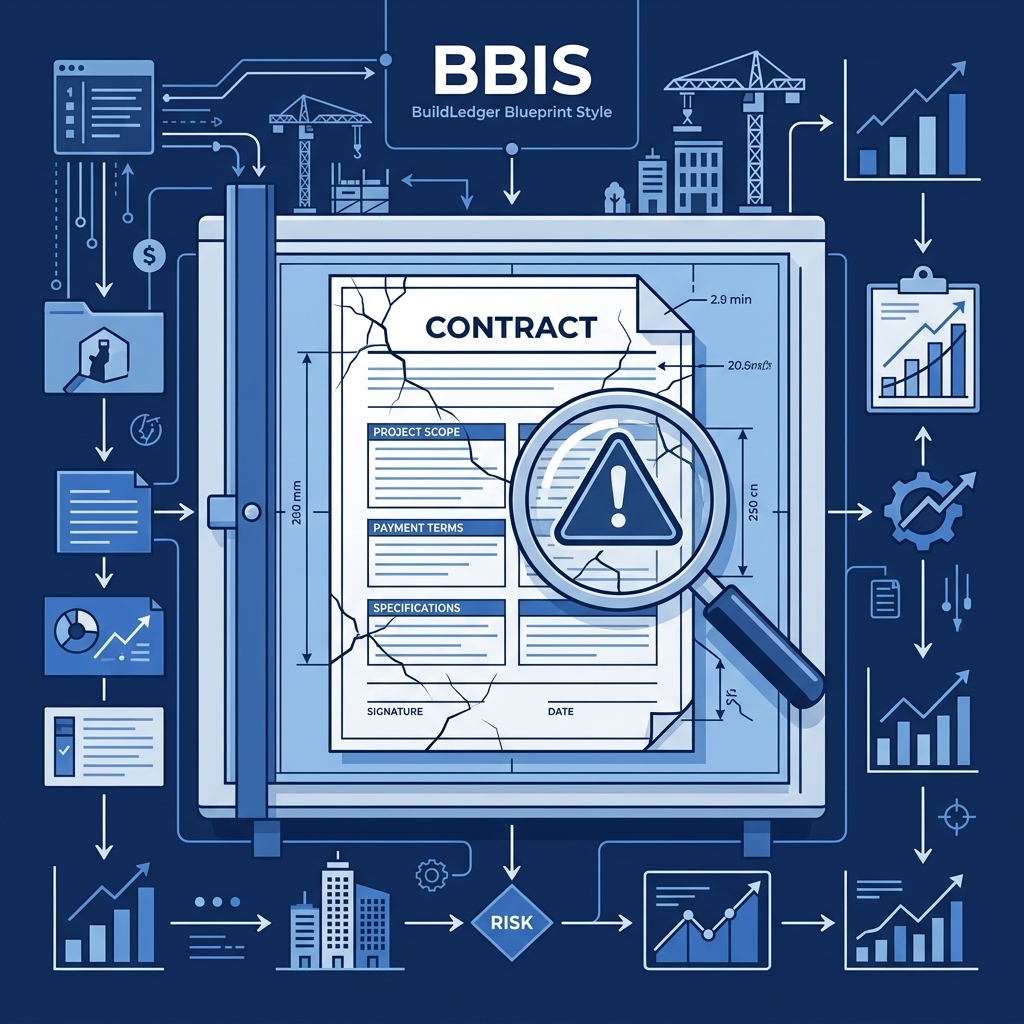
The Pervasive Threat: Why Documentation and Contractual Errors Are More Than Just Headaches
Construction projects are intricate ballets of logistics, labor, and capital. Even with meticulous planning and execution, profit margins can mysteriously dwindle, leaving stakeholders scratching their heads. Often, the culprits aren't headline-grabbing material shortages or labor strikes, but rather insidious, often overlooked failures in documentation and contractual diligence. These "silent killers" operate beneath the surface, transforming minor oversights into multi-million-dollar disputes, crippling delays, and irreparable reputational damage. In an industry where razor-thin margins dictate survival, ignoring these foundational elements is an express lane to financial distress. This deep dive will unmask the most pervasive and costly documentation and contractual errors, dissect their catastrophic impacts, and provide actionable strategies, often leveraging advanced construction technology, to fortify your projects against these hidden threats.
The Domino Effect: How Small Errors Cascade into Catastrophic Losses
A seemingly minor omission in a scope of work document – perhaps a vague definition of "site cleanup" – can trigger a cascade. This ambiguity leads to differing interpretations, escalating into a dispute over extra work. The dispute then delays progress, impacting subsequent trades, incurring daily liquidated damages, and potentially leading to legal intervention. Each step adds layers of cost: legal fees, extended overhead, demobilization/remobilization expenses, and the opportunity cost of resources tied up in a stalled project. What began as a single sentence's imprecision can metastasize into a project-altering financial hemorrhage. The true cost of a documentation error is rarely confined to the error itself; it's the exponential cost of its ripple effects across the project lifecycle.
Beyond the Bottom Line: Reputational Damage and Legal Exposure
Financial losses are often the most immediate concern, but the damage extends far beyond the ledger. A project plagued by disputes stemming from poor documentation or weak contracts erodes client trust, damages subcontractor relationships, and tarnishes a company's reputation within the industry. Future bids become harder to win, and attracting top talent becomes a challenge. Moreover, inadequate documentation is a primary driver of litigation. Without clear, defensible records, companies are vulnerable to costly lawsuits, regulatory fines, and adverse judgments, diverting critical resources and management focus away from productive work. The true cost includes the intangible erosion of brand equity and the tangible burden of protracted legal battles.
The Illusion of "Good Faith": Why Verbal Agreements Are a Recipe for Disaster
The construction industry, particularly among long-standing partners, often relies on informal agreements or "handshake deals." While trust is invaluable, it is not a substitute for formal, written documentation. Memories fade, personnel change, and interpretations diverge, especially when financial pressures mount. A verbal agreement for an expedited delivery or a minor scope adjustment, if not promptly documented and signed, provides zero legal recourse when disputes arise. It becomes one party's word against another, leading to stalemates, project delays, and often, unpaid work or unrecoverable costs. The cost of assuming "good faith" is the potential loss of entire claims and the dissolution of previously strong relationships.
Unmasking the Most Common & Costly Documentation Deficiencies
Incomplete or Ambiguous Scope of Work (SOW) Documents
Problem: The SOW is the bedrock of any project, yet it's frequently riddled with vague language, omissions, or unquantified deliverables. Phrases like "standard finish," "timely completion," or "as per industry best practices" are subjective and open to multiple interpretations. Crucially, often what is excluded from the scope is as important as what is included, and these exclusions are frequently absent.
Impact: This ambiguity is a direct invitation for scope creep, change order disputes, and rework. When a contractor believes an item is within scope and the owner expects it as an extra, or vice-versa, the project grinds to a halt. Each dispute consumes valuable project management time, delays progress, and can lead to costly arbitration or litigation. Unclear SOWs mean the goalposts are constantly shifting, making accurate budgeting and scheduling impossible. The cost is not just the extra work, but the associated delays and management overhead.
Actionable Mitigation: Mandate hyper-specific, quantifiable language. Utilize detailed specifications, drawings, and checklists. Clearly delineate inclusions and exclusions. Implement a robust SOW review process involving all key stakeholders. Leverage digital tools that allow for granular detail and version control, ensuring all parties are referencing the single, current source of truth.
Inadequate Daily Logs and Progress Reports
Problem: Daily logs are the project's diary, capturing critical information like labor hours, equipment usage, material deliveries, weather conditions, site visitors, safety incidents, and daily progress. However, they are often hastily completed, lacking detail, or simply not kept consistently. Missing information on delays, unforeseen conditions, or instructions given/received is common.
Impact: Without comprehensive daily logs, proving claims for delays, extra work, or site condition changes becomes exceedingly difficult. If a subcontractor claims a delay due to a lack of access, but your logs don't reflect site conditions, you have no defense. Similarly, justifying payment applications or tracking productivity metrics becomes a guessing game. In litigation, a consistent, detailed daily log is often the most compelling evidence. The cost is the inability to recover legitimate costs for delays or changes, or to defend against spurious claims.
Actionable Mitigation: Implement a standardized daily log template that captures all essential data points. Mandate daily completion and submission by site supervisors. Utilize mobile construction management apps that allow real-time data entry, photo/video attachment, and GPS tagging, making logs easy to complete and impossible to misplace. Train staff on the critical importance of detail and consistency.
Poorly Managed Submittal and RFI Processes
Problem: Submittals (shop drawings, material samples, product data) and RFIs (Requests for Information) are vital for ensuring constructability and design intent. The typical pitfalls include slow response times, informal communication channels (emails, texts), lack of centralized tracking, and unapproved items proceeding to installation.
Impact: Delays in submittal approvals directly impact procurement and construction schedules. An unaddressed RFI can lead to incorrect material orders, rework, or even significant structural errors if assumptions are made. The cost manifests as project delays, material waste, re-ordering expenses, and potential safety hazards. Without a clear audit trail, assigning responsibility for delays or errors becomes impossible, leading to disputes.
Actionable Mitigation: Implement a digital submittal and RFI management system. Establish clear turnaround times for reviews and responses. Centralize all communication and documentation related to submittals and RFIs. Ensure all approvals are formally documented and linked to relevant project elements. Automated reminders and dashboards can highlight bottlenecks, proactively preventing delays.
Neglecting Photo and Video Documentation
Problem: Despite the ubiquity of smartphones, consistent and systematic photo/video documentation of project progress, existing conditions, defects, or critical milestones is often overlooked. Photos are taken haphazardly, without clear context (date, location, specific issue).
Impact: Visual evidence is incredibly powerful in resolving disputes. Without it, "he-said-she-said" scenarios become common. Was the damage pre-existing? Was the work completed to standard before being covered? Did the site condition prevent access? The absence of clear visual records makes it challenging to prove compliance, document defects, justify change orders, or defend against claims of damage. The cost is the inability to win disputes, pay for damages you didn't cause, or redo work unnecessarily.
Actionable Mitigation: Integrate photo/video capture into daily workflows. Utilize apps that automatically geotag, timestamp, and categorize images. Encourage regular progress photos, before/after shots of critical installations, and immediate documentation of any issues or unforeseen conditions. Store all media in a centralized, easily searchable repository linked to project activities.
Unsystematic Change Order Tracking and Approval
Problem: Change orders are a fact of life in construction, but their management is frequently chaotic. Informal requests, verbal approvals, work proceeding without signed change orders, and inadequate cost breakdowns are rampant.
Impact: Unapproved work means unpaid work, leading to direct financial loss for the contractor. Conversely, owners can be hit with unexpected costs if changes are not properly reviewed and priced. Disputes over the scope, cost, or impact of changes are a leading cause of project friction and litigation. Without a formal, auditable process, budget overruns are inevitable, and trust between parties erodes. The cost is not just the unrecovered expense of the change, but the significant administrative burden and potential legal fees associated with resolving disputes.
Actionable Mitigation: Establish a strict, non-negotiable protocol: no work proceeds without a signed change order. Implement a digital change order management system that captures the request, justification, detailed cost breakdown, schedule impact, and formal approval by all relevant parties. Ensure version control and an immutable audit trail for every change.
Navigating the Minefield: Critical Contractual Errors That Decimate Profit
Ambiguous Payment Terms and Schedules
Problem: Contracts often contain vague language regarding payment milestones, application requirements, retention release, or mechanisms for handling disputed invoices. For instance, "payment upon substantial completion" without a clear definition of "substantial completion" or the process for achieving it.
Impact: Ambiguous payment terms are a primary cause of cash flow problems for contractors and subcontractors. Delays in payment can cripple a company, leading to inability to pay suppliers or labor, jeopardizing project progress, and even forcing bankruptcy. Disputes over payment terms often escalate to liens, arbitration, or litigation, incurring substantial legal fees and damaging business relationships. The cost is not only delayed revenue but potentially the complete loss of payment and the severe strain on working capital.
Actionable Mitigation: Clearly define all payment milestones, percentages, and conditions precedent for each payment. Specify the exact documentation required for payment applications (e.g., lien waivers, sworn statements, progress reports). Detail the process for disputing invoices and the timeframe for resolution. Leverage construction payment platforms that automate payment applications, lien waiver collection, and provide transparency on payment status.
Insufficient Indemnification and Hold Harmless Clauses
Problem: These clauses are designed to transfer risk. However, they are often poorly drafted, too broad, too narrow, or legally unenforceable in specific jurisdictions. Some contracts may lack reciprocal indemnification, leaving one party overly exposed.
Impact: Inadequate indemnification means a party could be held responsible for damages or liabilities caused by others. For example, a general contractor might be liable for a subcontractor's negligence if the clause is weak. This can lead to massive financial exposure from personal injury claims, property damage, or third-party lawsuits, far exceeding the project's profit margin. The cost is direct financial liability, legal defense costs, and potentially devastating insurance premium increases.
Actionable Mitigation: Engage legal counsel specializing in construction law to draft and review these clauses. Ensure they are specific, reciprocal where appropriate, and comply with state statutes (e.g., anti-indemnity statutes). Understand the limits of insurance coverage relative to indemnification obligations.
Weak or Missing Dispute Resolution Mechanisms
Problem: Many contracts either omit a dispute resolution process entirely or include only a vague statement about "negotiation." They fail to outline a tiered approach (e.g., direct negotiation, mediation, arbitration) or specific procedures for initiating and conducting these processes.
Impact: Without a clear, contractually defined path for resolving disagreements, minor disputes can quickly escalate to costly litigation. Litigation is notoriously slow, expensive, and destructive to business relationships. It diverts immense management time and resources. The cost is astronomical legal fees, prolonged project delays, and potentially adverse court judgments that could be avoided through more structured, less adversarial methods.
Actionable Mitigation: Include a clear, multi-tiered dispute resolution clause in every contract. Start with mandatory negotiation between project principals, followed by non-binding mediation, and finally binding arbitration (preferred over litigation for cost and speed). Define timelines for each stage and select a reputable arbitration body.
Inadequate Force Majeure and Delay Clauses
Problem: Force majeure clauses excuse performance due to unforeseeable events (acts of God, war, pandemics). Delay clauses address schedule impacts. Common errors include:
- Failing to define what constitutes a force majeure event specifically.
- Not clearly distinguishing between excusable (non-compensable), excusable (compensable), and non-excusable delays.
- Lack of specific notice requirements and documentation needed to claim delays.
Impact: Without robust clauses, a contractor may be unable to recover costs or claim schedule extensions for legitimate delays outside their control (e.g., extreme weather, supply chain disruptions). Conversely, an owner may be unable to recover liquidated damages for contractor-caused delays. The financial implications are massive: unrecoverable extended overhead costs, liquidated damages, lost profits on subsequent projects, and protracted disputes over responsibility and compensation for delays.
Actionable Mitigation: Draft comprehensive force majeure clauses listing specific events. Define clear categories of delays and their respective consequences (time extension only, time and money, or no relief). Mandate strict notice periods and detailed documentation requirements for any delay claim. Clearly outline the process for evaluating and approving delay claims.
Overlooking Key Insurance Requirements and Compliance
Problem: Contracts often stipulate insurance requirements (e.g., CGL, Workers' Comp, Builder's Risk) but often fail to enforce them rigorously. This includes not obtaining current Certificates of Insurance (COIs) from all subcontractors, not verifying coverage limits, or not ensuring proper endorsements (e.g., additional insured status).
Impact: If a subcontractor causes an accident or property damage and lacks adequate insurance, the general contractor or owner could be held solely liable, facing massive out-of-pocket expenses for claims, legal defense, and judgments. This exposure can bankrupt a company. The cost is direct financial liability for uninsured losses, significant legal defense expenses, and potential increases in your own insurance premiums.
Actionable Mitigation: Make current, verified COIs with proper endorsements a condition precedent for contract execution and payment. Implement a system to track insurance expiration dates and automatically request renewals. Utilize compliance management features in construction software to streamline this process, ensuring all parties meet their contractual insurance obligations before commencing work or receiving payment.
BuildLedger's Role: Transforming Documentation and Contract Management from Liability to Asset
The sheer volume and complexity of documentation and contractual elements in construction make manual management prone to error and inefficiency. This is where purpose-built construction-tech platforms like BuildLedger become indispensable, transforming these liabilities into strategic assets.
Centralized Digital Hub for All Project Data
BuildLedger provides a single source of truth for all project documentation. From initial contracts and SOWs to daily logs, RFIs, submittals, and closeout documents, everything resides in a secure, cloud-based repository. This eliminates fragmented information, ensures all stakeholders access the latest versions, and creates a robust, auditable record. No more lost papers, outdated spreadsheets, or email chain searches.
Streamlined Change Order and RFI Workflows
BuildLedger digitizes and formalizes the change order and RFI process. Requests are submitted, reviewed, costed, and approved within the platform, ensuring every step is documented with timestamps and stakeholder acknowledgments. Detailed cost breakdowns, schedule impacts, and approvals are intrinsically linked, preventing unauthorized work and enabling proactive budget management. This structured workflow reduces disputes and ensures fair compensation for legitimate changes.
Automated Payment Applications and Lien Waiver Management
BuildLedger automates the creation and tracking of payment applications, ensuring they align with contract milestones and submitted documentation. Crucially, it streamlines the collection and management of lien waivers, protecting owners and general contractors from future claims. This automation significantly reduces administrative burden, accelerates cash flow, and mitigates legal risks associated with payments.
Robust Audit Trails and Version Control
Every action, every revision, and every communication within BuildLedger is recorded, creating an immutable audit trail. This robust version control ensures that historical data is always available and verifiable, providing irrefutable evidence in case of disputes. Knowing precisely who did what and when provides unparalleled transparency and accountability, turning potential litigation into clear resolution.
Enhancing Transparency and Communication
By providing a shared, secure platform, BuildLedger fosters collaboration and transparency among all project participants – owners, general contractors, subcontractors, and suppliers. Real-time access to project status, documentation, and communication channels minimizes misunderstandings, builds trust, and keeps everyone aligned with project goals and contractual obligations. This proactive communication environment is a powerful deterrent against the "silent killers" of profit.
Conclusion
In the high-stakes world of construction, vigilance against the "silent killers" of profit — documentation and contractual errors — is not merely good practice; it is existential. These often-overlooked oversights possess the power to unravel projects, decimate budgets, and tarnish reputations. By proactively addressing weaknesses in your SOWs, daily logs, change order processes, and contractual clauses, you transform potential liabilities into strategic advantages. Embracing modern construction technology like BuildLedger is no longer an option but a necessity. It provides the digital infrastructure to centralize information, automate critical workflows, enforce compliance, and build an unassailable audit trail. Invest in these foundational elements, and you won't just protect your profits; you'll build a more resilient, efficient, and successful construction enterprise, poised for sustainable growth in an increasingly complex industry.