Not All Bids Are Created Equal
You've interviewed three contractors and received three bids for your kitchen remodel: $45,000, $52,000, and $65,000. Most homeowners immediately dismiss the highest bid and gravitate toward the lowest. This is a mistake.
A bid is a reflection of scope, not just price. If the scopes don't match, comparing the final numbers is useless.
The Gross vs. Net Scope
The first thing to look for is the level of detail. A one-page quote that simply says "Remodel kitchen as discussed: $45,000" is a massive red flag. This vague scope leaves the door wide open for extreme change orders once demolition begins.
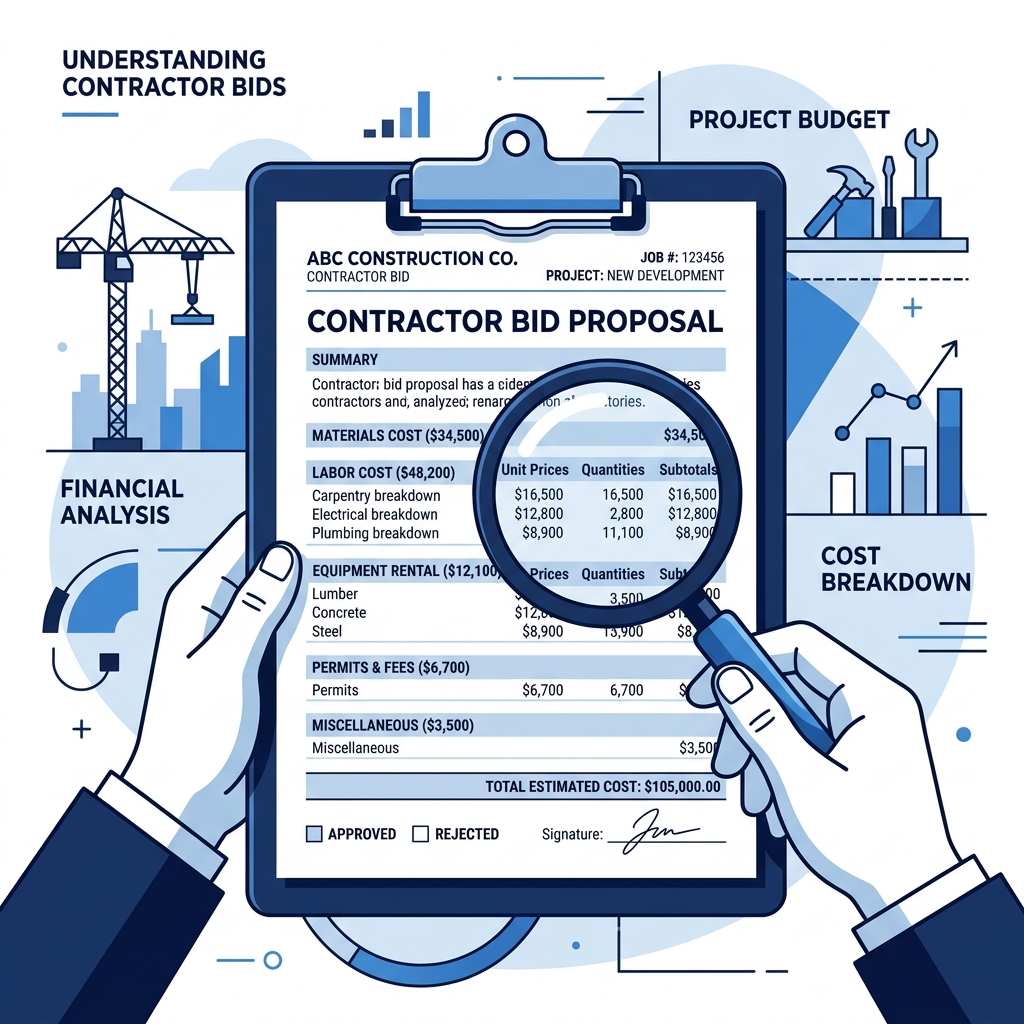
A professional bid will itemize the project by trade or phase (e.g., Demolition, Framing, Electrical, Plumbing, Drywall, Finishes).
Hunting for Exclusions and Allowances
- Exclusions: What is explicitly NOT included? Does the bid include permits? Trash removal? Painting? If a bid is significantly lower than others, it's usually because major necessities are excluded.
- Allowances: This is a placeholder number for items you haven't selected yet, like tile or appliances. If Contractor A gives you a $2,000 allowance for appliances and Contractor B gives you $8,000, Contractor A's bid looks $6,000 cheaper—but you will end up spending the same amount out of pocket.
The "True" Comparison
To compare bids accurately, you must normalize them. Ensure all allowances are identical across all bids. Confirm that all exclusions are accounted for. Once the scopes match perfectly, you can accurately judge who offers the best value.
Once you select a bid, that document becomes the foundation of your budget. Upload it to BuildLedger so you can track every real-world dollar spent against those original estimated line items.