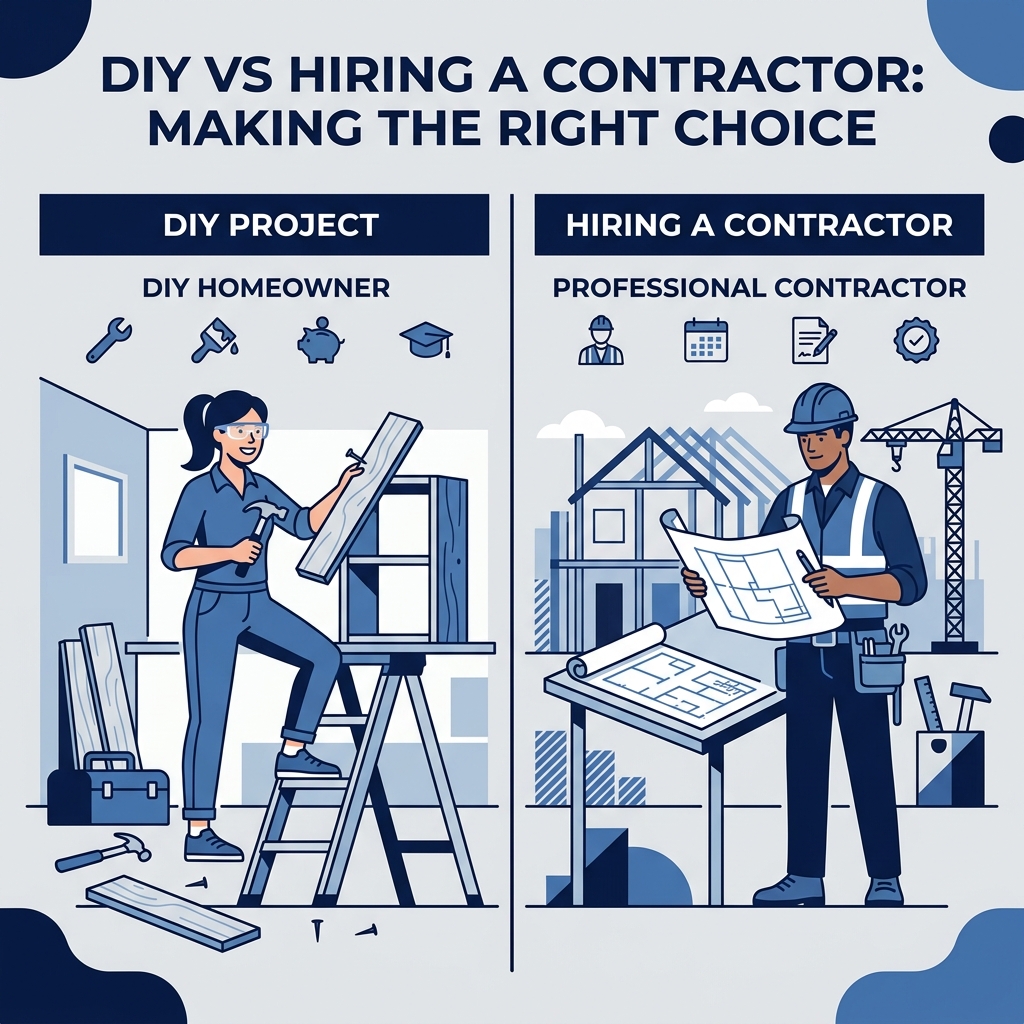
The Sweat Equity Dilemma
The rise of YouTube tutorials has convinced many homeowners they can tackle significant remodeling tasks. While DIY can save the 20% GC markup and hourly labor rates, a poorly executed job will devalue your home and cost twice as much to fix.
The Green Zone: Smart DIY
These tasks are relatively safe, require minimal specialized tooling, and have low risk of catastrophic damage if you mess up:
- Interior painting
- Installing trim and baseboards
- Laying floating luxury vinyl plank (LVP) flooring
- Basic landscaping
- Demolition (non-structural)
The Red Zone: Hire a Professional
These tasks carry severe life-safety, structural, or water-damage risks. Furthermore, botching these can void your homeowner's insurance:
- Electrical: Moving panels, running new circuits, or anything beyond swapping a fixture.
- Plumbing: Roughing in water lines or drains. Water damage is the silent killer of homes.
- Structural framing: Removing walls, altering trusses, or foundation repair.
- Roofing: Fall risk aside, a bad roof means a destroyed house.
The Hybrid Approach
Many homeowners hire a GC for the heavy lifting (framing, mechanicals, drywall) and take over for the finishes (painting, flooring). If you strike this arrangement, be incredibly clear about the dividing line in the contract.
Regardless of who does the work, track every receipt and invoice in BuildLedger. Mixing DIY purchases at Home Depot with professional contractor invoices can make a budget impossible to read without a dedicated financial ledger.