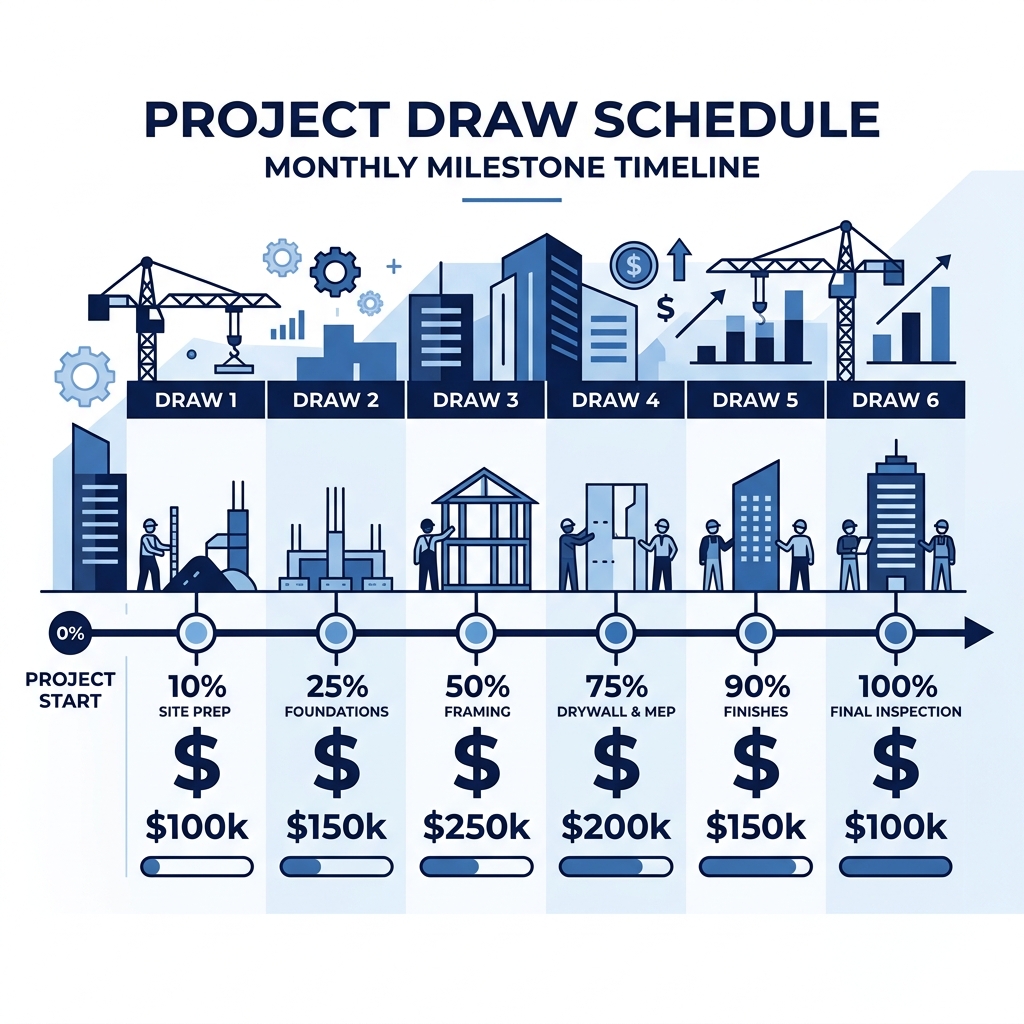
The Lifeblood of Construction
In construction, cash is king. If money stops flowing, the project stops moving. But paying out too much cash upfront leaves the property owner exposed. The solution is a meticulously crafted Draw Schedule.
What is a Draw Schedule?
A draw schedule is a detailed payment plan negotiated before the project begins. It bases payments ("draws") on the completion of specific, measurable milestones rather than arbitrary dates.
A Typical Major Remodel Schedule
While every project differs, a healthy draw schedule often looks like this:
- Draw 1 (10-15%): Deposit at contract signing. Covers early permitting, design, and initial mobilization.
- Draw 2 (15-20%): Upon completion of demolition and rough framing.
- Draw 3 (20-25%): Upon successful "Rough-In" inspections (plumbing, electrical, HVAC hidden behind walls).
- Draw 4 (20-25%): Upon completion of drywall, mudding, taping, and installation of major cabinetry.
- Draw 5 (10-15%): Upon installation of finishes (paint, flooring, tile, fixtures).
- Draw 6 (5-10%): Retainage. Paid only after the final punch list is complete and the Certificate of Occupancy is issued.
The Golden Rule of Draws
Never let the cash paid exceed the value of the work put in place. If the project is 50% physically complete, you should not have paid 80% of the contract value.
Managing this math requires precise ledger tracking. BuildLedger allows you to map out your draw schedule from day one and automatically tracks how much of the contract has been billed versus how much remains, preventing overpayment.