The End of the Lumber Rollercoaster
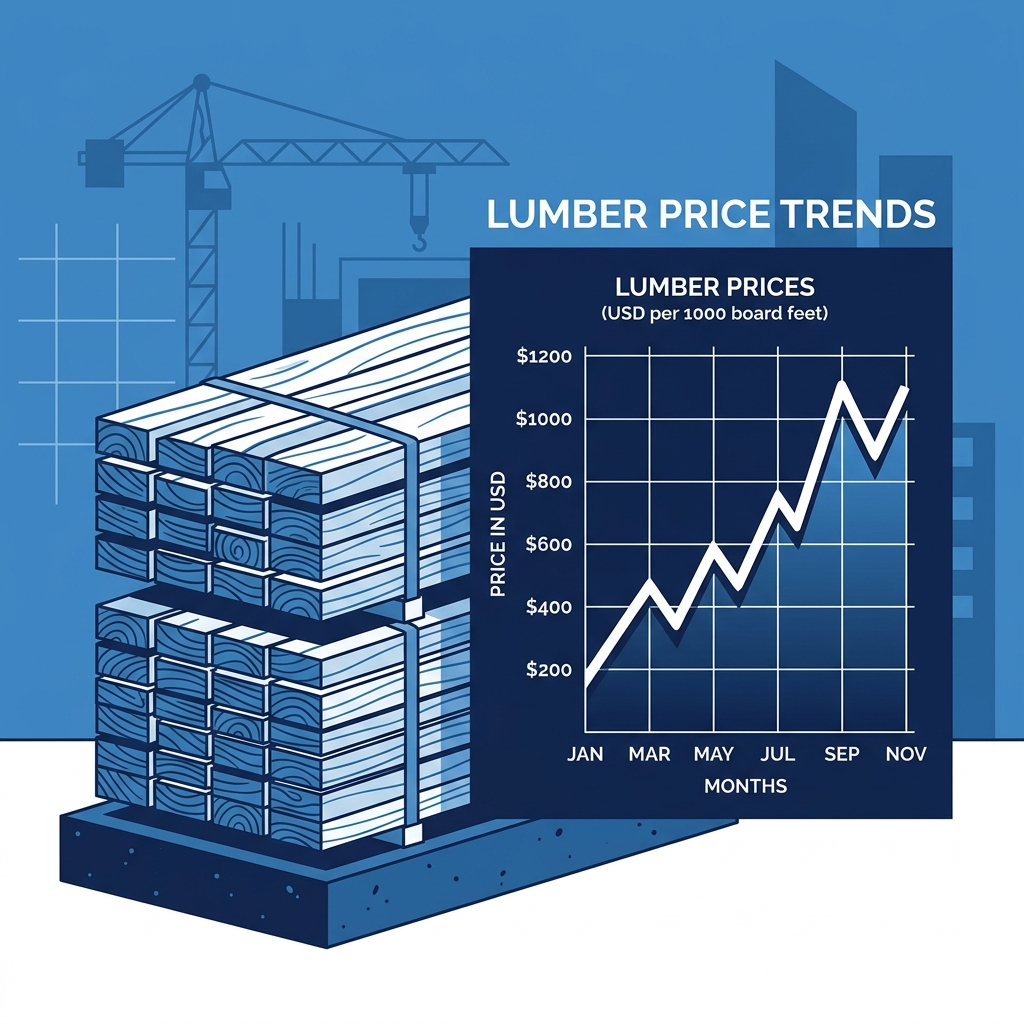
If you attempted a home addition or new build anytime in the last four years, you experienced the whiplash of lumber prices. Framing packages that historically cost $15,000 were suddenly quoting at $45,000, blowing up homeowner budgets overnight.
However, as we move through Q1 of 2026, the futures market is showing sustained stabilization. Mills have caught up, supply chains have normalized, and demand has leveled out.
What This Means for Your Framing Budget
Predictability is back. Contractors can now confidently hold a bid for 30 days without fearing a catastrophic spike in framing costs before they sign the contract. For homeowners, this means fewer surprises.
Currently, the cost of framing a standard home addition is hovering around $15 to $20 per square foot, down significantly from the peak but slightly above historical pre-pandemic norms.
Beware of the "Price Drop" Illusion
While lumber is cheaper, labor and other materials (like concrete, copper, and electrical components) have not seen the same deflation. The overall cost of a remodel remains historically high. Do not assume that a 50% drop in lumber futures equates to a 50% drop in your total project cost.
Securing Your Material Pricing
Even in a stable market, it's wise to lock in material pricing early. Work with your General Contractor to identify long-lead items and order them as soon as the project is permitted.
Use a financial tracking tool to log all material deposits and ensure they align with the initial bid. BuildLedger's ledger system makes tracking material invoices against the original estimate simple and transparent.