The Pervasive Problem: Why Unforeseen Costs and Delays Are Construction's Silent Killers
In the high-stakes world of construction, the specter of budget overruns and schedule delays looms large over every project. While often dismissed as an unavoidable part of the business, these 'unforeseen' challenges are, in fact, frequently foreseeable and preventable. They are not merely minor inconveniences; they are silent killers that erode profit margins, strain client relationships, damage reputations, and can ultimately lead to project failure or even business insolvency. The industry averages for project overruns are stark: studies consistently show that a significant percentage of construction projects exceed their original budget and timeline, often by double-digit percentages. This isn't just about a few extra dollars; it's about the systemic leakage of capital and time that could be reinvested or utilized more effectively.
The Illusion of Fixed Budgets: Unpacking the "Contingency" Myth
Many construction professionals operate under the illusion that a fixed budget, coupled with a standard 5-10% contingency, is sufficient protection against financial surprises. This approach is fundamentally reactive and often inadequate. A contingency fund, while necessary, is an admission of uncertainty, not a strategy for risk mitigation. When a project relies heavily on drawing from contingency, it signals a failure in initial planning and risk identification. Moreover, a generic contingency percentage rarely aligns with the specific risk profile of a unique project. High-risk projects, such as complex renovations or builds in challenging geological conditions, demand a more robust, data-driven approach to financial safeguarding than a simple percentage can provide. The true cost of relying solely on contingency is the lost opportunity to proactively identify, assess, and mitigate risks, turning potential problems into actual, expensive liabilities.
Cascading Effects: How Small Delays Snowball into Catastrophic Overruns
A minor delay in one phase of a construction project rarely remains isolated. Instead, it triggers a domino effect, cascading through subsequent stages and amplifying costs exponentially. A delay in foundation work, for instance, can push back framing, which then impacts HVAC, plumbing, electrical installations, and finishing trades. Each pushed-back trade incurs additional costs: extended equipment rentals, idle labor, material storage fees, potential price increases for materials ordered later, and, critically, liquidated damages for late project completion. Furthermore, these delays often necessitate rushed work in later stages, increasing the likelihood of errors, rework, and quality compromises, which in turn generate more costs and potential legal disputes. The cumulative effect transforms what began as a small, manageable delay into a catastrophic budget overrun and a severely missed deadline.
The Human Element: Cognitive Biases and Inadequate Planning
Beyond external factors, human biases and deficiencies in planning contribute significantly to project risks. Optimism bias often leads project managers to underestimate timelines and costs, assuming best-case scenarios rather than accounting for potential roadblocks. Anchoring bias can cause teams to stick to initial estimates even when new information suggests they are unrealistic. Furthermore, inadequate communication, fragmented data, and a lack of standardized risk assessment methodologies prevent teams from gaining a holistic view of potential challenges. Without a structured framework for identifying and evaluating risks, critical vulnerabilities remain hidden until they manifest as costly problems, forcing reactive, expensive solutions rather than proactive, efficient prevention.
Defining Proactive Risk Management in Construction
Proactive risk management in construction is a systematic, forward-looking discipline designed to identify, assess, plan for, and monitor potential risks throughout the entire project lifecycle, from conception to closeout. It's a fundamental shift from merely reacting to problems as they arise to strategically anticipating and neutralizing them before they can impact project objectives. This approach recognizes that every project, regardless of its scale or complexity, is inherently susceptible to a multitude of risks—financial, operational, environmental, safety, and regulatory—and that early intervention is invariably more cost-effective than post-facto remediation.
Beyond Reactive Firefighting: Shifting from Mitigation to Prevention
The traditional construction paradigm often resembles a continuous firefighting exercise, where project teams scramble to address issues only after they've erupted. This reactive stance is inefficient, stressful, and incredibly expensive. Proactive risk management, by contrast, champions a preventative mindset. Instead of waiting for a supply chain disruption to halt work, a proactive team identifies potential single points of failure in the supply chain, vets alternative suppliers, and establishes contingency agreements well in advance. Instead of reacting to a structural flaw discovered during inspection, a proactive approach involves rigorous design reviews, advanced modeling, and quality assurance protocols from the outset. This shift from 'fixing' to 'preventing' is the cornerstone of achieving predictable project outcomes, controlling costs, and maintaining schedules.
The Core Pillars: Identification, Assessment, Response Planning, Monitoring
A robust proactive risk management framework is built upon four interconnected pillars:
- Risk Identification: This involves systematically uncovering all potential risks across every facet of the project. Techniques include brainstorming sessions, SWOT analysis, expert interviews, checklist analysis, root cause analysis, and reviewing historical project data. Risks can range from material price volatility and labor shortages to adverse weather conditions, regulatory changes, and subcontractor performance issues.
- Risk Assessment: Once identified, risks must be evaluated for their likelihood of occurrence and their potential impact (financial, schedule, quality, safety). This can involve both qualitative (e.g., high, medium, low) and quantitative (e.g., probability percentages, estimated cost impact) analysis. This step prioritizes risks, allowing teams to focus resources on the most critical threats.
- Risk Response Planning: For each significant risk, a specific response strategy must be developed. Common strategies include:
- Avoidance: Eliminating the risk entirely (e.g., choosing a different material or construction method).
- Mitigation: Reducing the likelihood or impact of the risk (e.g., implementing stricter safety protocols, diversifying suppliers).
- Transfer: Shifting the risk to another party (e.g., through insurance, specific contract clauses with subcontractors).
- Acceptance: Acknowledging the risk and planning for its potential impact if it occurs (e.g., setting aside a specific contingency for a known, unavoidable risk).
- Risk Monitoring and Control: Risk management is not a one-time activity. It requires continuous monitoring of identified risks, tracking the effectiveness of response plans, identifying new risks as the project evolves, and updating the risk register accordingly. This ongoing process ensures that the project remains resilient to emerging threats and that strategies are adapted as circumstances change.
Unveiling the Hidden ROI: Tangible Benefits of Proactive Risk Management
While the immediate costs of implementing a robust risk management system—software, training, dedicated personnel—are visible, the return on investment often remains 'hidden' until a potential crisis is averted. However, the ROI is profoundly tangible and far-reaching, impacting every aspect of a construction business's profitability and sustainability.
Direct Cost Savings: Minimizing Rework, Penalties, and Material Waste
The most direct financial benefit of proactive risk management is the substantial reduction in unforeseen costs. By identifying potential design flaws early, rework—a notorious budget killer—is minimized. Anticipating supply chain disruptions allows for timely procurement adjustments, avoiding costly expedited shipping fees or project stoppages. Proactive quality control reduces defects, preventing expensive call-backs and warranty claims. Furthermore, by adhering to schedules more consistently, projects avoid liquidated damages and penalties stipulated in contracts for late completion. Even subtle improvements in material handling and storage, driven by risk assessments of potential damage or theft, contribute to significant savings by reducing waste and loss.
Accelerated Project Completion: The Value of Time and Early Revenue
Time is money, especially in construction. Every day a project is delayed represents lost revenue potential, extended overhead costs (site supervision, equipment rental, administrative expenses), and deferred client income. Proactive risk management, particularly through meticulous schedule risk analysis and contingency planning for critical path activities, significantly improves the likelihood of on-time or even early completion. For developers, early completion means earlier occupancy, earlier sales, and a quicker return on capital investment. For contractors, it means the ability to move onto the next project sooner, optimizing resource utilization and increasing overall project throughput and profitability.
Enhanced Client Satisfaction and Reputation: Building Trust and Future Business
Clients value predictability, transparency, and reliability above almost all else. A project delivered on time and within budget, with minimal unforeseen issues, fosters immense client satisfaction. This translates directly into repeat business, positive referrals, and a stellar industry reputation—assets that are invaluable for long-term growth and competitive advantage. Conversely, projects plagued by delays, cost overruns, and disputes severely damage client trust and can lead to negative reviews, diminishing future prospects. Proactive risk management is, therefore, a powerful tool for relationship building and brand strengthening.
Improved Team Morale and Productivity: Reducing Stress and Friction
Constant firefighting, unexpected problems, and the pressure of looming deadlines take a heavy toll on project teams. High-stress environments lead to burnout, decreased productivity, increased errors, and higher employee turnover. By proactively identifying and addressing risks, project managers create a more stable, predictable, and less stressful work environment. Teams can focus on executing tasks efficiently rather than constantly reacting to crises. This leads to improved morale, better collaboration, higher quality work, and ultimately, a more productive and engaged workforce.
Better Insurance Premiums and Reduced Litigation Risk
A track record of successful project delivery, characterized by minimal claims and disputes, can positively influence insurance premiums. Insurers view organizations with robust risk management frameworks as lower risk, potentially offering more favorable rates. Crucially, proactive risk management significantly reduces the likelihood of costly litigation. By meticulously documenting risks, mitigation strategies, and communication, and by adhering to contractual obligations, construction firms build a strong defense against potential claims and disputes, saving immense legal fees and reputational damage.
Leveraging Construction Technology for Superior Risk Management
The complexity and dynamic nature of modern construction projects make manual, siloed risk management approaches obsolete. Construction technology, specifically integrated SaaS platforms like BuildLedger, offers unparalleled capabilities to transform risk management from a reactive chore into a proactive, data-driven strategic advantage.
Centralized Data Platforms: The Single Source of Truth
Fragmented information is a primary driver of risk. Project data often resides in disparate spreadsheets, emails, paper documents, and individual hard drives, leading to inconsistencies, omissions, and outdated information. Centralized data platforms provide a single, accessible source of truth for all project-related information—contracts, budgets, schedules, change orders, communications, site photos, material specifications, and safety reports. This ensures that every stakeholder is working from the most current and accurate data, drastically reducing information-based risks such as miscommunication, incorrect material orders, or budget discrepancies. When everyone sees the same numbers and documents in real-time, the likelihood of errors stemming from outdated information plummets.
Predictive Analytics and AI: Spotting Risks Before They Emerge
Advanced construction tech leverages predictive analytics and artificial intelligence to move beyond historical data analysis. By processing vast amounts of project data—from past performance metrics to real-time site conditions, weather forecasts, and market trends—AI algorithms can identify subtle patterns and correlations that human analysis might miss. This allows for the prediction of potential risks, such as schedule slippages due to specific resource constraints, budget overruns based on current spending rates, or even quality issues related to specific environmental factors. Imagine receiving an alert that a particular subcontractor's past projects frequently exceeded their allotted time when combined with certain material types; this allows for proactive intervention before issues manifest.
Real-time Collaboration and Communication Tools: Bridging Information Gaps
Miscommunication is a notorious source of risk in construction. Email chains become unwieldy, phone calls are undocumented, and critical information gets lost. Integrated communication tools within construction tech platforms provide structured channels for real-time collaboration. Teams can share updates, ask questions, document decisions, and attach relevant files directly within the project context. This creates an auditable trail of all communications, ensuring transparency and accountability. When a superintendent on site immediately flags a potential issue via a mobile app, and the project manager, architect, and relevant subcontractor are instantly notified and can collaborate on a solution, risks are addressed before they escalate.
Digital Ledgering and Budget Tracking: Granular Control and Early Warning
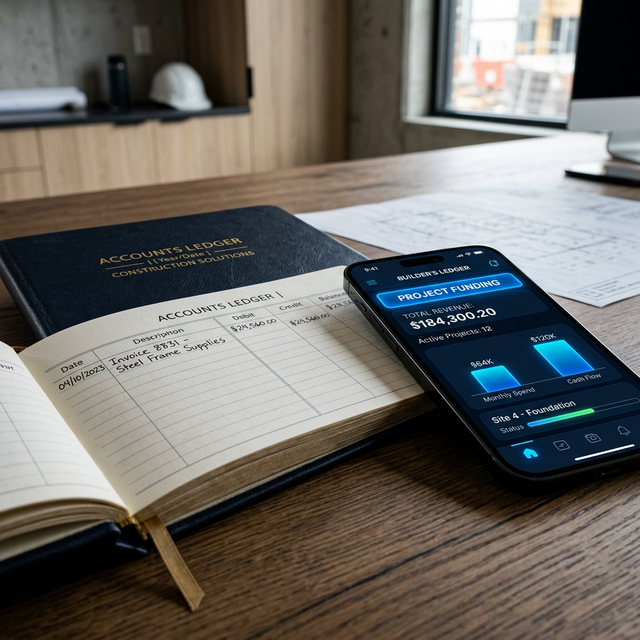
BuildLedger’s core strength lies in its sophisticated digital ledgering and budget tracking capabilities, which are crucial for financial risk management. Traditional budgeting often involves static spreadsheets updated intermittently, making it difficult to gauge real-time financial health. With BuildLedger, every expense, invoice, payment, and change order is tracked meticulously in real-time against the project budget. This granular visibility allows project managers to identify budget variances as they occur, not weeks or months later. Early warning systems can flag when spending in a particular category is trending above budget, enabling immediate corrective action. This proactive financial control prevents minor overspends from accumulating into major budget crises, ensuring the project remains within its financial parameters.
Automated Compliance and Documentation: Mitigating Legal and Regulatory Risks
Construction projects are subject to a labyrinth of regulations, permits, and compliance requirements. Failure to adhere to these can result in hefty fines, project stoppages, and legal challenges. Construction tech automates much of the documentation process, ensuring that all necessary permits are tracked, inspections are scheduled, and safety protocols are recorded. Digital checklists, automated reminders, and centralized document repositories ensure that compliance is not an afterthought. This systematic approach significantly mitigates legal and regulatory risks, protecting the project from costly penalties and litigation.
Supply Chain Visibility and Management: Shielding Against Material Disruptions
Global supply chain volatility has underscored the critical need for robust supply chain risk management. Construction technology provides enhanced visibility into the supply chain, allowing teams to track material orders, monitor delivery schedules, and identify potential delays or shortages. Platforms can integrate with supplier databases, providing real-time inventory levels and alternative sourcing options. By anticipating potential material disruptions, project managers can proactively adjust procurement strategies, explore alternative materials, or revise schedules, thereby safeguarding against costly project delays and material price escalations.
Implementing a Proactive Risk Management Framework with BuildLedger
Integrating a proactive risk management framework into your operations, especially with a powerful platform like BuildLedger, is a strategic investment that pays dividends. Here’s a structured approach:
Step 1: Comprehensive Risk Identification & Categorization
Begin by conducting thorough risk identification workshops with key stakeholders from all departments: project management, finance, procurement, legal, and site teams. Utilize BuildLedger’s centralized document management features to store and organize historical project data, lessons learned, and risk registers from previous projects. Categorize identified risks (e.g., financial, operational, environmental, safety, contractual) within BuildLedger’s custom fields or a dedicated risk module. This initial phase creates a foundational 'risk library' specific to your organization and project types.
Step 2: Quantitative and Qualitative Risk Assessment
For each identified risk, assess its likelihood and impact. BuildLedger can facilitate this by linking potential financial impacts directly to budget line items or by allowing for the creation of 'what-if' scenarios within the budgeting module. For qualitative assessments, use BuildLedger’s communication logs to record expert opinions and team consensus on risk severity. This data-driven approach moves beyond subjective estimations, providing a clearer picture of true project vulnerabilities.
Step 3: Developing Robust Risk Response Strategies
Once risks are assessed, develop specific response plans for each high-priority risk. Document these strategies within BuildLedger, linking them directly to the identified risks. For example, if a material price volatility risk is identified, the response plan might include securing fixed-price contracts with suppliers, pre-purchasing critical materials, or identifying alternative materials. BuildLedger's contract management features can help track these agreements. For schedule risks, integrate contingency tasks directly into your digital schedule, managed alongside financial data within the platform.
Step 4: Continuous Monitoring and Control with Real-time Data
This is where BuildLedger truly shines. Leverage its real-time budget tracking, expense logging, and invoice management features to continuously monitor financial risks. Set up automated alerts within BuildLedger to notify relevant personnel when spending approaches thresholds or deviates from planned expenditures. Utilize its reporting dashboards to visualize project progress against schedule and budget, allowing for immediate identification of emerging risks. Regularly review and update the risk register within the platform, ensuring it reflects current project status and newly identified threats.
Step 5: Post-Project Review and Knowledge Capture
Upon project completion, conduct a thorough post-mortem analysis. Use BuildLedger’s comprehensive project data—financial records, communication logs, change order history, and risk register—to analyze which risks materialized, how effectively they were managed, and what lessons can be learned. Capture this knowledge within BuildLedger as historical data to inform future risk identification and planning, continuously refining your organization's risk management capabilities.
Overcoming Implementation Challenges
Adopting a proactive risk management framework, particularly one powered by new technology, isn't without its hurdles. Understanding and addressing these challenges upfront is key to successful implementation.
Cultural Resistance to Change
One of the most significant barriers is often cultural resistance. Project teams accustomed to reactive problem-solving may view proactive risk management as an additional administrative burden or an indictment of their current methods. Overcome this by emphasizing the benefits to individuals (reduced stress, clearer direction) and the organization (improved profitability, reputation). Provide comprehensive training, involve key team members in the design of the new processes, and champion early successes to build buy-in and demonstrate the tangible value of the new approach.
Data Silos and Integration Hurdles
Implementing a centralized platform like BuildLedger requires breaking down existing data silos. This can be complex if different departments use disparate systems or if historical data is not easily migratable. Prioritize data integration efforts, work with BuildLedger’s support team for seamless onboarding, and ensure that data governance policies are established to maintain data quality and consistency across the platform. The initial effort invested in data unification will yield significant long-term benefits in data accuracy and accessibility.
Initial Investment in Technology and Training
The upfront cost of new software and the time required for training can be perceived as obstacles. However, it's crucial to frame this as an investment with a high ROI, rather than an expense. Quantify the potential savings from averted risks, reduced rework, and accelerated project completion. Demonstrate how BuildLedger's features directly address the most expensive pain points currently faced by the organization. Phased implementation and targeted training programs can also help manage the initial resource commitment, ensuring a smoother transition and quicker adoption.
Conclusion
The construction industry is at an inflection point, where traditional, reactive approaches to project management are no longer sustainable in an increasingly complex and competitive landscape. The 'hidden ROI' of proactive risk management, amplified by the capabilities of advanced construction technology platforms like BuildLedger, is no longer a theoretical concept but a quantifiable strategic imperative. By systematically identifying, assessing, responding to, and monitoring risks, construction firms can move beyond the cycle of firefighting, transforming uncertainty into predictability, and potential losses into guaranteed gains. Embracing this paradigm shift not only safeguards project profitability and ensures timely delivery but also cultivates a culture of excellence, builds lasting client trust, and positions your organization for sustained growth in the modern construction era. The time to unlock this hidden ROI and fortify your projects against the unforeseen is now.