Choosing the Right Contract Structure
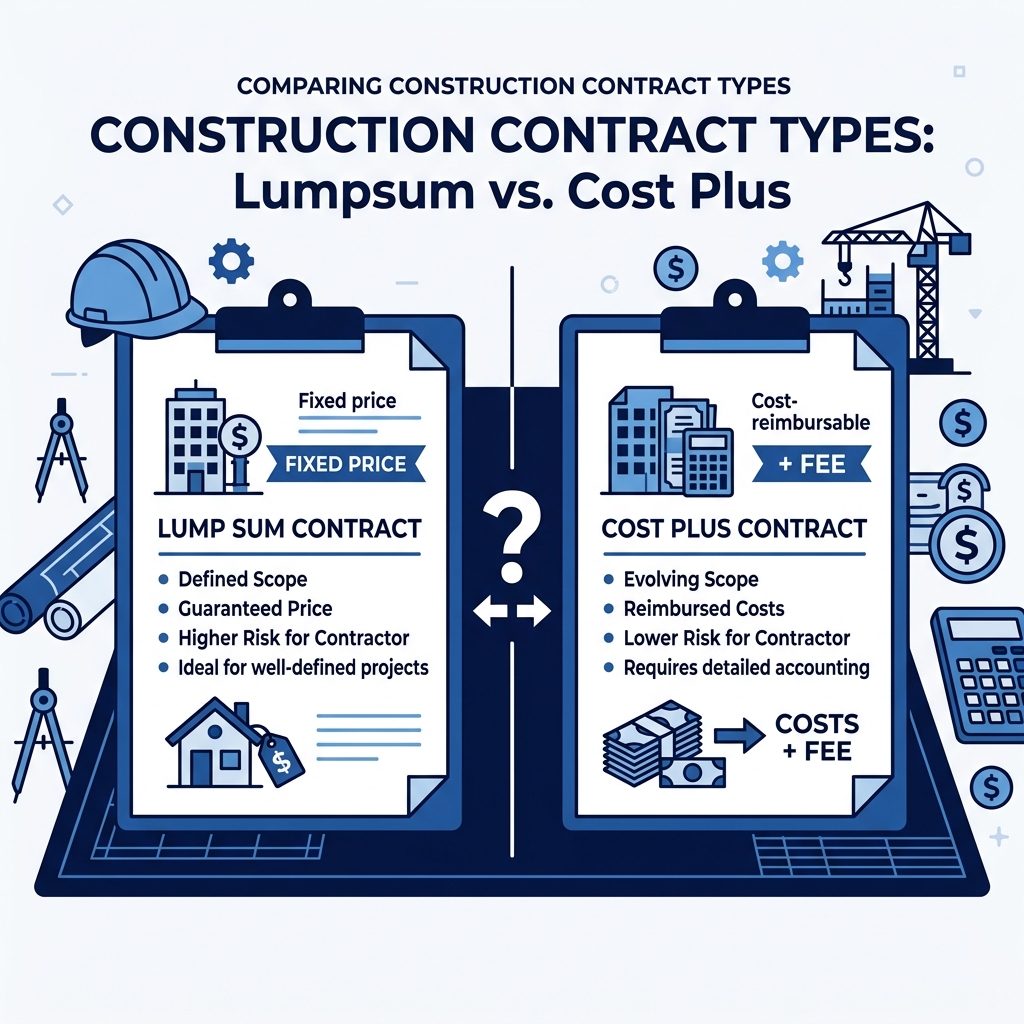
Before any hammers swing, you have to agree on how you will pay your contractor. The two dominant contract types in residential remodeling are Fixed-Price (Stipulated Sum) and Cost-Plus (Time and Materials). Choosing the wrong one for your project type can lead to massive financial stress.
The Fixed-Price Contract
A fixed-price contract guarantees a total cost for a highly specific scope of work. If it costs the contractor more to complete the job, they eat the loss. If it costs less, they keep the extra profit.
- Pros: Budget certainty. You know exactly what you will pay unless you initiate a change order.
- Cons: Contractors build a high contingency (often 15-20%) into fixed-price bids to protect themselves against unknowns. You pay this premium whether the unknowns happen or not. It's also difficult to use for projects with vague plans.
The Cost-Plus Contract
In a cost-plus contract, you agree to pay the actual cost of labor and materials, "plus" a predetermined markup (usually 15-25%) for the contractor's overhead and profit.
- Pros: Total transparency. You never pay for "what ifs" that didn't happen. It's highly flexible if you want to make design changes on the fly.
- Cons: No budget ceiling. If a project drags on or framing takes twice as long as expected, you pay for every hour. It requires meticulous auditing of invoices and receipts.
Which is Better?
For custom, high-end, or historically complex renovations with many unknowns, Cost-Plus is often the only honest way to build. For straightforward remodels (like finishing a basement), Fixed-Price provides peace of mind.
Regardless of the contract, financial tracking is paramount. If using Cost-Plus, a tool like BuildLedger is absolutely critical to audit the contractor's weekly invoices against material receipts and labor logs.